Metro Area Growth at Risk from Recent Drop in Immigration

Population growth in many metropolitan areas is in doubt given the recent steep drop in immigration, which could undercut household growth and housing demand. This is especially true for large metro areas and those outside of the Sunbelt, which have been dependent on immigration in recent years. With lower levels of immigration, metro areas will need to rely on natural growth (births minus deaths), which has been declining, and domestic migration, which is unevenly distributed, for population growth. As such, many metros will face stagnating population growth or even loss in the near future.
The surge in immigration in 2022–2024 drove population growth nationally before immigration levels dropped precipitously this year, according to our recent State of the Nation’s Housing report. Border encounters have fallen from a monthly average of 240,000 during the surge to a monthly average of 37,000 in the first six months of 2025 (Figure 1). This drop in border encounters implies a much lower level of immigration than in recent years. In 2023, for example, there were 560,000 new arrivals who were lawful permanent residents but this group represented just a quarter of the 2.3 million net arrivals that year, according to the Population Estimates Program.
Figure 1: Border Encounters Dropped Precipitously in 2025
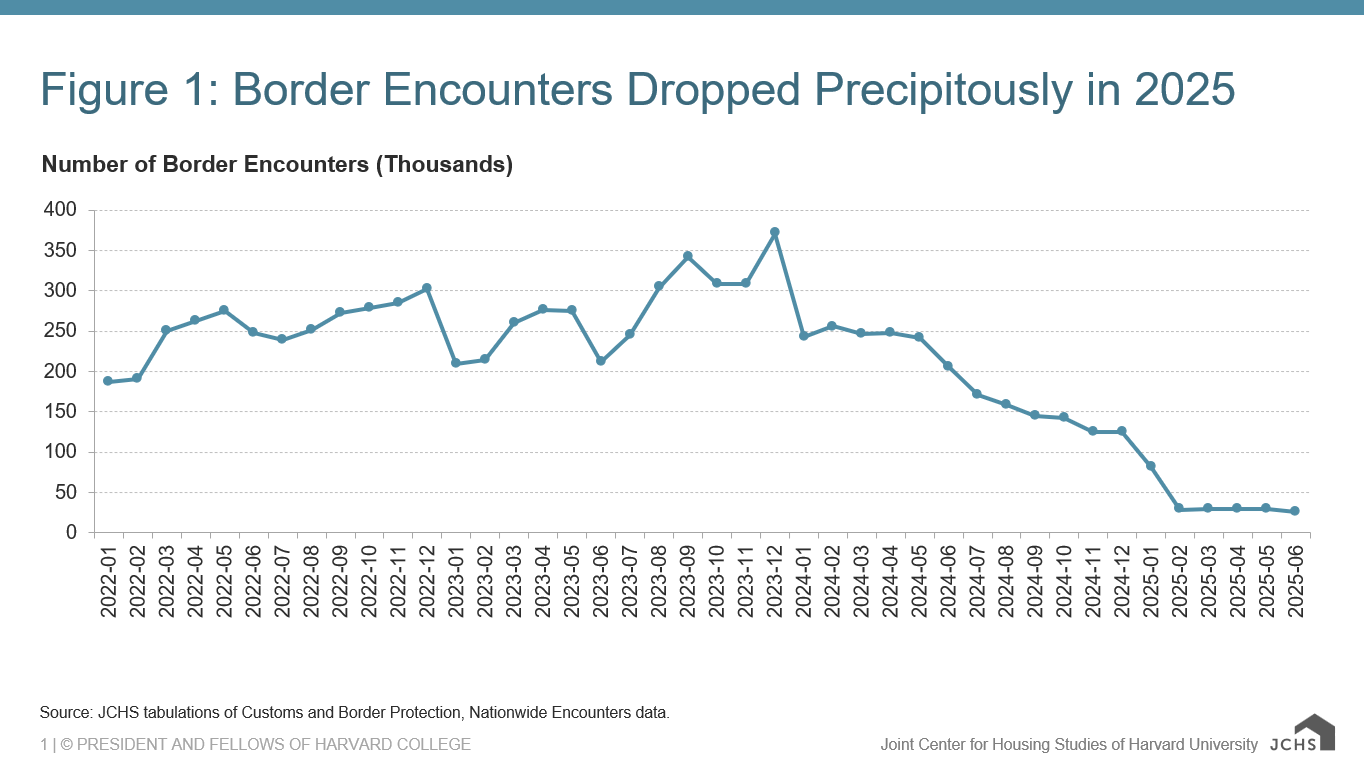
Source: JCHS tabulations of Customs and Border Protection, Nationwide Encounters data.
Immigration drove metro area population growth to be faster than national growth in 2024. Of the three drivers of population growth—net domestic migration, net international migration, and natural growth of the resident population—immigration was the largest source in nearly two-thirds of metro areas, including almost every large metro area with at least one million residents (Figure 2). Immigration was particularly important for the metro areas that had either net domestic outmigration or natural loss in 2024. In over a quarter of all metro areas, including two-fifths of large metro areas, there would have been population loss if not for immigration.
Figure 2: Many Metro Areas Depend on Immigration
The reduction in immigration will be felt unevenly due to regional differences in the drivers of population growth. Immigration played a large role in metro population growth in all regions in 2024 but was less central to metro areas in the South, which typically had both natural growth and net domestic inflows (Figure 3). On average, metro areas in all other regions had net domestic outflows in 2024 due to an ongoing trend of migration towards the Sunbelt. Average metro area natural change is positive across regions, but this type of growth has been steadily declining and is projected to turn negative nationally by 2033.
Figure 3: Immigration Is Key to Metro Growth in All Regions
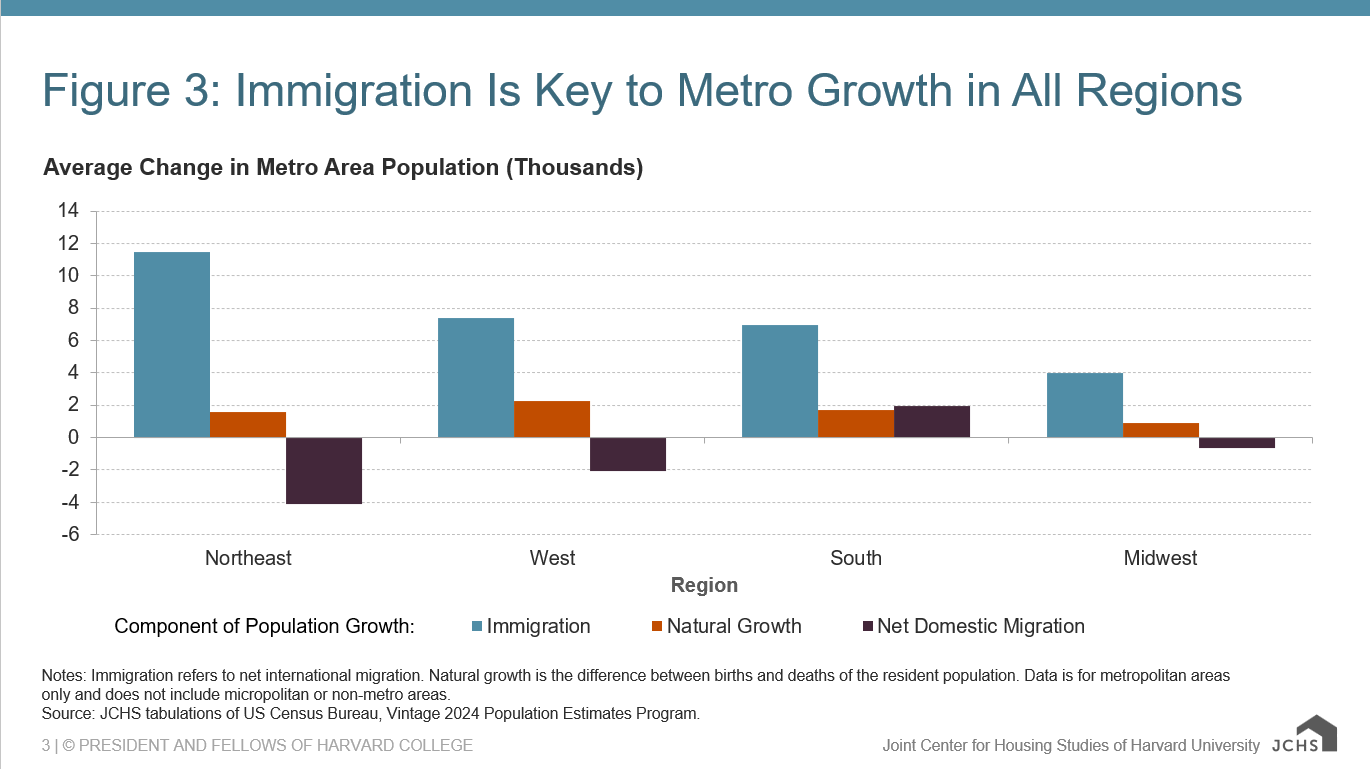
Notes: Immigration refers to net international migration. Natural growth is the difference between births and deaths of the resident population. Data is for metropolitan areas only and does not include micropolitan or non-metro areas.
Source: JCHS tabulations of US Census Bureau, Vintage 2024 Population Estimates Program.
The recent downturn in immigration will lead to slower growth or population loss in metro areas across the country in the short term, which will undercut household growth and housing demand in the long term. Indeed, if immigration levels remain below average amid the ongoing decline in natural change, there will be historically low household growth and demand for new housing units in the next decade, according to the Center’s recent household projections. While this will affect all metro areas, large metro areas and those outside the Sunbelt will feel the effects most acutely given the recent centrality of immigration to their population growth.


